Grupo Compay Segundo Interview
Írta: Galgóczi Tamás | 2026. 05. 04.
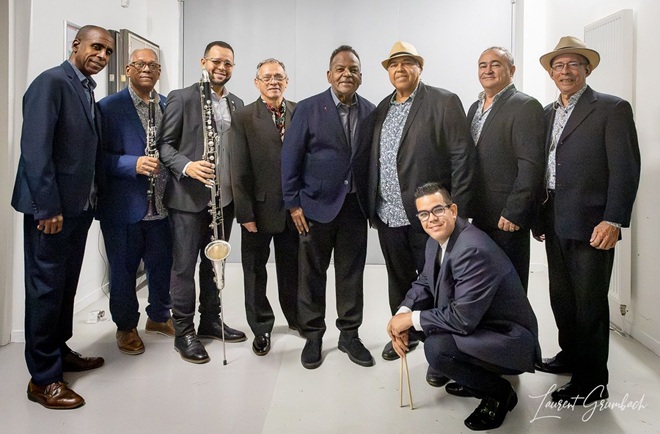
At the 2026 edition of Budapest Ritmo, one of the most anticipated performances was that of the Cuban Grupo Compay Segundo. On this occasion, we spoke with Compay Segundo’s son, Salvador Repilado, about the band’s current plans, the continuation of his father’s legacy, and the story behind their latest album.
Your latest album was released in 2022, and I find it special in several ways. What inspired you to write your own songs for this record?
Salvador Repilado: I wanted to pay tribute to Compay in a different way, creating something new without losing the essence of his music and tradition, while also taking it a step further. We shared it with the audience and, so far, it has been very well received, while still performing the repertoire that people always expect at our concerts.
The sound and voice of Vívelo differ from your earlier recordings. What musical ideas guided this new direction?
On this album we had several guest musicians, which is why the recordings have different sounds. We wanted to create something to pay tribute to Compay Segundo, making the music a bit more danceable, aimed at younger audiences, to freshen it up, but without losing the identity of Compay’s music.
Where do you draw the line between preserving tradition and embracing innovation? Is this a conscious concept for you, or does it develop more instinctively?
The line is about preserving what makes people immediately recognize my father Compay Segundo’s music, the traditional roots and our identity as a group, while at the same time embracing innovation. It’s a process that is mostly instinctive, but also consciously guided by what we want to achieve.
There are many renowned guest musicians featured on this album. How did these collaborations come about, and what did they add to the record?
Depending on each song, we would think about which voices or artists we could invite to perform it, which was not easy because, as we know, Cuba is full of very talented musicians. We chose them not only for their prestige, but also for their musical integrity. Each of them gave everything to achieve the final result of the album: Issac Delgado, Alexander Abreu, Sory Pérez, and Maikel Dinza, who is also one of the music producers and co-author of many of the tracks on the album, and whose contribution was especially important to the project.
You often say that you carry on the spirit and musical legacy of Compay Segundo. Does this mainly take place through live performances, or do you promote his music in other ways as well?
Yes, through concerts is one of the ways we keep Compay’s legacy alive, performing his repertoire—especially the most well-known pieces—and trying to preserve his essence and life experiences even within the new material.
How do you pass on this legacy to the next generation? Do you work with young musicians, or are there more structured or institutional forms of this?
The group includes musicians who joined at a young age. One of the first things we ask of them is to listen to Compay’s music so they can understand and approach his interpretations, and we are quite demanding about that.
This doesn’t mean they cannot bring their own musical background and training, but always within the traditional framework—that is what allows us to pass on the legacy.
In addition, Compay’s music is played on the radio, and television often broadcasts images related to his life and work.
What personal memories do have of Compay Segundo, and what do you feel is his most defining influence on you to this day?
Compay always used to say that first you have to be a good human being, and then a musician; I learned that from him since I was a child.
From my father I remember his advice, I remember him always telling us to do good, how important family was to him, and what it means to be a good father.
His most defining influence on me is his legacy and the respect for who he was as a person.
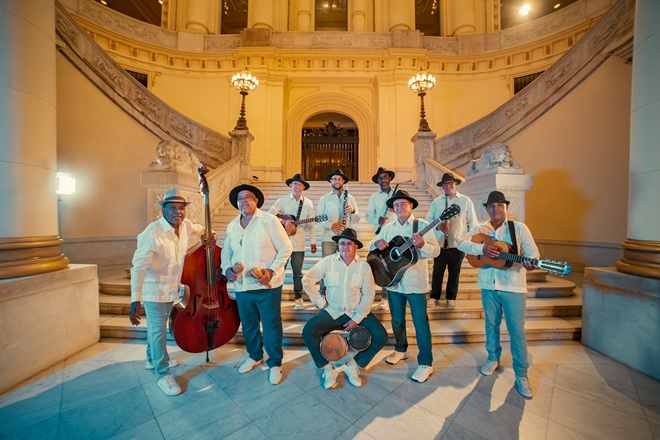
Do you experience this legacy more as a responsibility or as a source of inspiration?
I would say both. It’s a great responsibility, because Compay is someone who is irreplaceable in music, and at the same time he is a constant source of inspiration.
In your opinion, what makes Cuban music so timeless and universally popular around the world?
I think it comes from its rhythm, its cadence, and its musicality. A little bit of all of this lives in every Cuban, and it’s what we express when performing each piece of music, what we pass on to everyone who listens to Cuban music.
Next year marks the 70th anniversary of Grupo Compay Segundo. How do you plan to celebrate this milestone?
This year we have been celebrating the 70th anniversary at every concert, keeping Compay’s music alive while also preparing a new album, which will include some unreleased songs.
We continue to honour and give thanks to Compay in this 70th anniversary year.
This interview is taking place before your performance in Budapest. On what basis do you put together the concert program, and how much do you try to maintain a balance between classic Compay Segundo songs and newer compositions?
There are songs we can never leave out of the repertoire, such as Chan Chan, Macusa, and some Buena Vista classics, but we also include pieces from our latest production, the album Vívelo, which we hope the audience in Budapest will really enjoy.
It will be a very beautiful concert, and we are sure the Budapest audience will appreciate it and remember it fondly.